
Recent Posts

Celebrating Carol Terry: A Life of Resilience, Leadership, and Impact
Date: June 23, 2026 This June, we celebrate the 80th birthday of Carol Terry — co-founder of the Wilson [...]

My Experience Being Pregnant With Wilson Disease
By Carly Albinder, LCSW, WDA Patient Education and Support Director When I started thinking about getting pregnant, I knew [...]
You Are Not Alone: Kelsey’s Journey With Wilson Disease
By Kelsey Pusillo, WD patient and WDA Patient Ambassador Coordinator Early Symptoms and a Life-Changing Diagnosis During my high [...]
EL-PFDD Meeting for Wilson Disease: Patients and Caregivers Make Their Voices Heard
By Edward Tabor, MD, and Sarah Wicks, JD, MPH The WDA organized and led a daylong “Externally-Led Patient-Focused Drug [...]
Zinc and Me
By Rhonda Rowland, WDA President After 20 years of taking over-the-counter (OTC) zinc to treat my Wilson disease (WD), [...]
How One Family’s Wilson Disease Journey Led to a Transformative Legacy
By Rhonda Rowland, WDA President This past spring, I received a phone call that felt like being told we'd [...]
Zinc and Me
By Rhonda Rowland, WDA President
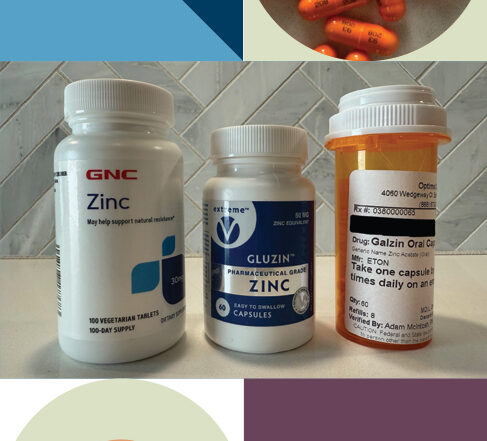
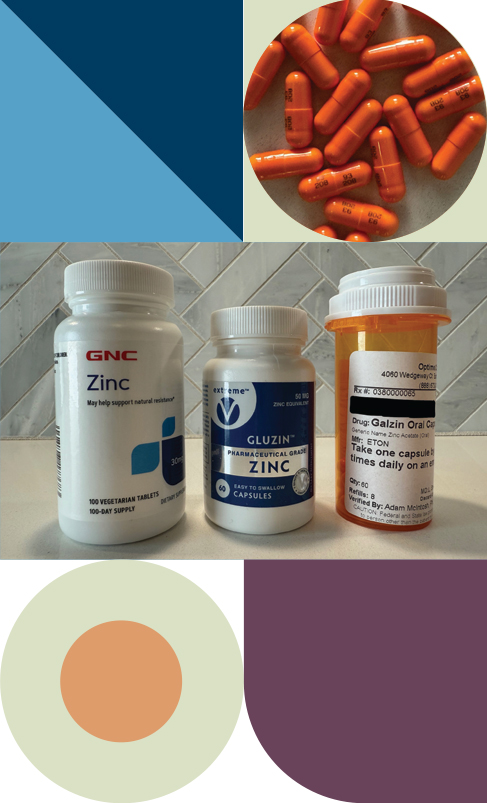
After 20 years of taking over-the-counter (OTC) zinc to treat my Wilson disease (WD), I switched to prescription Galzin. Why? Two reasons. First, as President of the Wilson Disease Association (WDA), I wanted to better understand how specialty pharmacies work. Prescription zinc acetate is no longer available at your local pharmacy – it’s only available through a specialty pharmacy. (More on that later). Second, I wanted to contribute to a promising effort: the potential development of an extended-release formulation of Galzin. If successful, WD patients could perhaps take just two – rather than three – daily doses of the medication. An extended release formulation may lessen stomach upset that can lead to poor adherence or the need to switch medications.
Switching from penicillamine to zinc
I had been on penicillamine, a chelating medication, since being diagnosed with WD in 1983 after going into liver failure. While it saved my life, over time it caused troubling side effects.
In 2004, I traveled to see Dr. Michael Schilsky, who was located in New York City at the time, because I wanted to switch from penicillamine to zinc. Dr. Schilsky asked why I wanted to switch, then explained how to make the transition. He pointed to a shelf lined with various OTC zinc supplements in the corner of the exam room and told me I could choose any of them.
His advice gave me pause. Two years earlier, I had left my career as a CNN medical correspondent. I knew from my reporting that the U.S. Food and Drug Administration (FDA) does not regulate vitamins and minerals. So, while I was a bit uneasy about switching from an FDA-approved drug to an unregulated OTC supplement, I trusted Dr. Schilsky. He has a medical degree, I don’t. I was referred to him by Dr. Irmin Sternlieb, a giant in the field who had retired from the WD Center at Albert Einstein Medical Center. I decided to go with it.
Back home in Atlanta, I chose to buy my zinc from GNC. Since it’s a large chain specializing in vitamins and mineral supplements, I figured the retailer must have some quality control. For the next eight years, that’s how my WD was treated, and I did just fine.
Switching to OTC Gluzin
In 2012, I read an article in the WDA’s Copper Connection newsletter – a call for a volunteer to write a page on liver transplantation for the WDA website. With my background in medical reporting, I thought, “I can do that!” During my research I came across Gluzin on the WDA site. It was supposedly a pharmaceutical grade OTC zinc.
Then-WDA President Mary Graper had worked to find someone who could manufacture a more affordable OTC zinc option. Prescription Galzin was prohibitively expensive for some, and others struggled with side effects. OTC Gluzin, produced by John Wu of extremeV, is a zinc gluconate product. Gluconate and acetate are different salts chemically, so they bind differently with the mineral zinc and may affect the body differently.
According to the WDA’s Medical Advisory Committee – the message to WD patients was essentially “user beware.” Gluzin hadn’t been studied in WD patients, and, like other OTC products, its manufacturing and quality controls are not supervised by the FDA.
Still, I trusted John Wu and the WDA more than GNC. Gluzin was a bit more expensive than GNC’s zinc, but the peace of mind was worth it. For the next 13 years I relied on John Wu’s zinc – and appreciated his loyalty to the WD community. During the COVID19 pandemic, when zinc became scarce due to people buying it in hopes of building up their immune systems, he made sure WD patients got Gluzin first.
Switching from OTC Gluzin to prescription Galzin
Earlier this year, Eton Pharmaceuticals acquired prescription Galzin from its previous manufacturer, Teva. Eton’s leadership asked to meet with the WDA Board to introduce themselves and explain some upcoming changes. Leading the list: Galzin would soon be distributed exclusively through a specialty pharmacy – initially Optime, later switched to Anovo Specialty Pharmacy to improve service.
Eton asked if the WDA would help get the word out to patients to prevent interruption in their treatment. Of course we would. Then came the news of a possible clinical trial for an extended-release zinc formulation – one that could reduce the number of daily doses, improve adherence and reduce side effects. That got my attention.
Talk to any WD patient, and they’ll tell you: timing doses around meals is a constant challenge. Fewer daily doses would significantly improve quality of life.
What is a specialty pharmacy?
Unlike traditional pharmacies like CVS and Walgreens, specialty pharmacies focus on medications for rare and complex medical conditions. They offer a higher level of patient support, help with insurance approvals and handle medications that often require special handling.
The WD community had already been introduced to the concept with Orphalan’s, Cuvrior (non-refrigerated trientine tetrahydrochloride) which is provided through Pantherx Rare Pharmacy.
Specialty pharmacies get mixed reviews. For some health care providers the upfront paperwork can be time-consuming and frustrating. Some health systems have their own pharmacies that may not partner with specialty pharmacies.
For me, it was a hassle at first. I had to be home for each delivery to sign for it. I asked the specialty pharmacy if there was a workaround — and there was: I was offered the option to have the drug delivered without a signature and to sign electronically after delivery. Problem solved.
Which works better? Prescription Galzin or OTC zinc?
A 2019 studylooked at that question. While it had limitations, it found that some WD patients can be effectively treated with either zinc acetate or zinc gluconate. However, there’s a risk of treatment failure with either of these – which is why regular monitoring is critical.
How well zinc works depends heavily on adherence. Zinc must be taken every day, away from meals. Even as WDA President I mess up – it’s easy to miss that tricky middle-of-the-day dose. When I used OTC zinc, I had no tracking system. I bought more when I ran out. No one was checking in.
Now, with prescription Galzin, I get regular calls from the specialty pharmacy to set up my deliveries. I can see by the number of pills left in the bottle if I’ve been compliant. And, to get a refill, I must see my doctor.
Have I seen a difference in how the two formulations of zinc are working? No. I’ve done well with both. But zinc is just one part of my treatment plan. I’ve been diligent about monitoring and have become more copper-conscious with my diet.
Grateful for options, hopeful for progress
I’m grateful to have treatment options — because not everyone with a rare disease does.
All WD patients are different. What works for one person might not work for another. We all respond differently, face different side effects, and our needs can change over time. That’s why having options matters so much.
It’s up to us to be our own best advocates — to ask questions, learn about treatments, and take part in research when we can. The more we know and the more we speak up, the better chance each of us has to live the best life possible with Wilson disease.