
Recent Posts
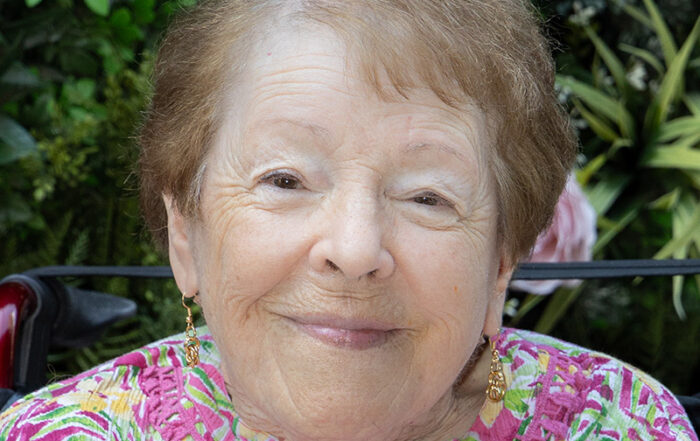
Celebrating Carol Terry: A Life of Resilience, Leadership, and Impact
Date: June 23, 2026 This June, we celebrate the 80th birthday of Carol Terry — co-founder of the Wilson [...]
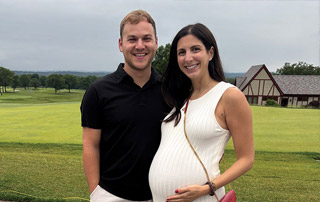
My Experience Being Pregnant With Wilson Disease
By Carly Albinder, LCSW, WDA Patient Education and Support Director When I started thinking about getting pregnant, I knew [...]
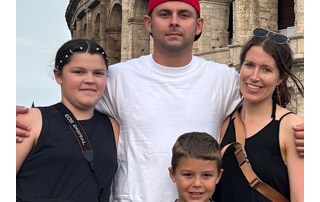
You Are Not Alone: Kelsey’s Journey With Wilson Disease
By Kelsey Pusillo, WD patient and WDA Patient Ambassador Coordinator Early Symptoms and a Life-Changing Diagnosis During my high [...]
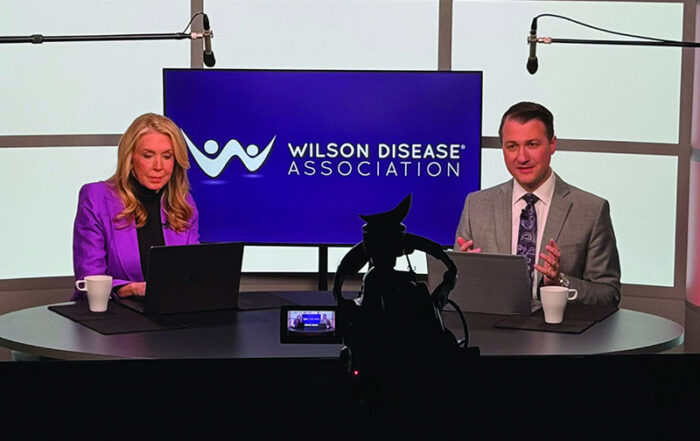
EL-PFDD Meeting for Wilson Disease: Patients and Caregivers Make Their Voices Heard
By Edward Tabor, MD, and Sarah Wicks, JD, MPH The WDA organized and led a daylong “Externally-Led Patient-Focused Drug [...]

Zinc and Me
By Rhonda Rowland, WDA President After 20 years of taking over-the-counter (OTC) zinc to treat my Wilson disease (WD), [...]
How One Family’s Wilson Disease Journey Led to a Transformative Legacy
By Rhonda Rowland, WDA President This past spring, I received a phone call that felt like being told we'd [...]
How One Family’s Wilson Disease Journey Led to a Transformative Legacy
 By Rhonda Rowland, WDA President
This past spring, I received a phone call that felt like being told we’d won the lottery.
Andy Spaulding was on the line with extraordinary news: his late mother’s charitable trust was leaving nearly $750,000 to the Wilson Disease Association. In the organization’s 42-year history, we had never received a gift this large in a lump sum. It was—and is—transformative, giving the WDA a financial stability it has never had before.
As Andy and I talked, we began discovering a number of coincidences. We’re both graduates of the University of Wisconsin-Madison. We both spent many years in neighboring Milwaukee suburbs. Both our families spent winters in southwest Florida. And we both have Wilson disease.
I wanted to understand more. What was Andy’s diagnostic journey like? What led his late mother to make this incredible gift? How had Wilson disease touched their family?
The next time we met, it was over Zoom and included Andy’s wife, Tonya. I listened to their story of persistence, medical detective work, and the power of not giving up when something isn’t right.
THE EARLY SIGNS
For years, Andy Spaulding’s annual physical showed the same puzzling result: elevated liver enzymes with no clear explanation. His primary care physician admitted, off the record, that when liver numbers stay high for several years, doctors often assume someone isn’t being truthful about their alcohol consumption.
But Andy wasn’t drinking excessively. And as he approached his 49th birthday, more troubling signs began to emerge.
“It really came out of the blue,” says Andy, a Wisconsin golf course owner. “I had high liver enzymes in my annual physical for five or six or seven years that were unexplained.”
What followed was a medical odyssey that would take him through multiple specialists, inconclusive tests, and mounting symptoms before finally arriving at a diagnosis that would change everything.
A WIFE’S WATCHFUL EYES
Andy’s wife Tonya noticed the changes first. After 22 years of marriage, she knew her husband—an easygoing, energetic man. But the person she was seeing wasn’t quite himself.
“When friends would see you, they would ask about your health and were concerned,” Tonya recalls, as she looked at her husband. “You had really dark skin, looked thin and tired, and you slept a lot.”
The symptoms seemed disconnected at first: extreme fatigue, unexplained weight loss, rashes on his head and feet, difficulty swallowing, neck problems. Andy remembers once sleeping from 10 p.m. to noon without ever getting out of bed—completely unlike him.
Their daughter Anna, home from college at UW-Madison for the summer, pulled her mom aside with alarm. “She said, ‘What’s wrong with Dad? I didn’t even recognize him. His skin was changing color,'” Tonya remembers.
Even Andy’s personality shifted. “He’s always been really easygoing, and fun,” Tonya says. “And he got irritable and angry sometimes.”
Yet Andy, like many men facing health concerns, was reluctant to pursue further testing. “I was doing the typical guy thing, just I’ll be fine, leave me alone,” he admits.
It was Tonya’s persistence—and a crucial intervention from her own doctor—that kept them searching for answers.
THE MISSED CLUES
The path to diagnosis included multiple medical facilities. Testing at the Medical College of Wisconsin’s Froedtert Hospital for suspected hemochromatosis (iron overload) revealed Andy had only one functioning kidney—his other had atrophied, likely from copper damage, though no one recognized it at the time.
Looking back, doctors had actually performed a ceruloplasmin test during that workup, and Andy’s levels were low—a key indicator of Wilson disease. “But they don’t treat Wilson disease at the Medical College of Wisconsin, so they whiffed on it,” Andy says.
By summer 2019, Andy’s condition had deteriorated noticeably. That Thanksgiving, he became so ill with what appeared to be the worst case of strep throat urgent care had ever seen—with open ulcers in his throat—that he spent four days in bed at Tonya’s family gathering in Michigan.
“When my family saw him, they were like, ‘We’re really sorry that we gave you a hard time, he does seem really sick,'” Tonya says. Breaking down in the car during their traditional holiday shopping, she told her family: “There’s something… it’s not good. Something’s really wrong with him.”
A DOCTOR WHO DOESN’T GIVE UP
Finally, Andy’s primary care physician referred him to a gastroenterologist—Dr. Vijayapal, who had helped Tonya through her own health challenges years earlier. Though they initially saw his physician assistant, she reassured them: “Don’t worry, Dr. Vijayapal will figure it out. He doesn’t stop until he figures out the reason.”
That persistence proved lifesaving. When other tests came back inconclusive, Dr. Vijayapal ordered a liver biopsy in December 2019. The tissue was stained for both iron and copper, but results were unclear. So he requested an actual count.
Normal copper levels would be 15 to 55. Andy’s measured over 700.
On New Year’s Eve 2019, the call came: Andy likely had Wilson disease.
A DIAGNOSIS, BUT THE HARD WORK CONTINUES
Even with a diagnosis, the path to treatment wasn’t straightforward. Andy was referred to a liver specialist at the University of Wisconsin who confirmed the diagnosis and prescribed trientine, a chelating medication that removes excess copper from the body.
Then came a frustrating roadblock: insurance denials. For a month or two, Andy tried to get the medication approved, only to be denied repeatedly, all the way to the final appeal at UnitedHealthcare. “They were telling me that this was a fatal disease, and at the same time that I couldn’t get the medicine for it. It was crazy,” Andy says.
That’s when Tonya’s research skills—honed during her own previous health crisis—came to the rescue. “I’m a digger. I do all the research,” she says. “If you keep digging, there’s hope. I think everybody needs hope.”
Hours upon hours of online research led her to the Wilson Disease Association website and its list of Centers of Excellence. She found Dr. Fred Askari (who trained under the pioneering Dr. George Brewer) at the University of Michigan. Within a month, they had an appointment.
“Dr. Askari said, ‘Oh, we’ll write a letter,'” Andy recalls. “And I think he told me this after the fact, he said, ‘I think they see our letterhead and just approve it, because they know we’re not going to stop until they do.'”
Penicillamine is an older, cheaper Wilson disease drug that doctors often avoid because it causes more side effects than newer options like trientine. However, insurance companies sometimes push patients toward it since it’s the only FDA-approved drug for initial treatment—a technicality they use to save money.
Penicillamine is especially risky for someone with one kidney because it’s much more likely to cause kidney damage than trientine.
GETTING WORSE BEFORE GETTING BETTER
Starting treatment in April 2020, Andy faced what his doctor had warned him about: things would get worse before they got better.
“That first summer was kind of a nightmare,” Andy says. His copper levels shot up as the medication began pulling excess copper from his organs and tissues—49 years’ worth of accumulation suddenly mobilizing through his system. Sleep problems worsened dramatically. “I went from sleeping too long to going two nights in a row without sleeping a wink.”
He developed a tremor—the kind where you hold your hands out and they shake slightly. “It’s very subtle at this point,” he notes five years later, explaining that his neurologist can barely see it anymore.
But Andy kept going. Working a stressful job while caring for his mother with dementia, he stayed committed to the treatment protocol and a strict low-copper diet, avoiding high-copper foods like shellfish, nuts, and chocolate.
“Every year got a little better, and in the last couple years, I’ve felt like myself again,” Andy says. “I do feel a lot better.”
His liver, surprisingly, was never severely damaged—scans show barely noticeable fatty liver. His doctor focuses more on protecting Andy’s single kidney when prescribing any medications. And while Andy continues taking trientine (now at a reduced dose), his doctors are working toward getting him to a maintenance therapy of zinc, which blocks copper absorption rather than removing it.
UNDERSTANDING THE CONNECTION
The Wilson disease diagnosis had implications beyond Andy’s own health. Genetic testing revealed that his brother and both his children are carriers of the faulty ATP7B gene, though they likely don’t have the disease itself.
Andy’s mother, Victoria Spaulding, was cognitively aware enough at the time of his diagnosis to understand what Wilson disease was and that it was genetic—something that would impact their family for generations to come.
She and her late husband, Arthur Lyle, had established a charitable trust years earlier. After Andy’s diagnosis, she made the decision to name the Wilson Disease Association as a beneficiary.
THE LUCK FACTOR
Looking back, Andy and Tonya know they were fortunate in ways many Wilson disease patients aren’t. Andy was 49 at diagnosis—later than typical for Wilson disease, which often appears in childhood or young adulthood. He never developed Kayser-Fleischer rings, the telltale copper deposits in the eyes that help doctors recognize the disease. And despite years of copper accumulation, he avoided the devastating neurological and liver damage that affects many patients.
“He comes from hardy stock,” Tonya says with a laugh, noting his grandparents all lived into their late 80’s and 90s.
But their good fortune came with tremendous effort. Tonya spent countless hours researching, printing articles, reading patient stories on forums like Inspire, and advocating for her husband when he was too sick or too skeptical to advocate for himself.
That determination led them to the Wilson Disease Association, to the Centers of Excellence network, and ultimately to Dr. Askari and proper treatment.
PAYING IT FORWARD
Now, Andy and Tonya want to help others facing the same frightening diagnosis they once faced.
“A lot of times people are on the internet telling the worst stories, because the people who are doing okay are off living their lives,” Tonya observes. “Giving people hope is so important. If there was anything we could do to help, we wanted to.”
Andy agrees: “I’m grateful that I was diagnosed, found treatment, and that the medicine’s available, because I know that’s not a given.”
The gift from Andy’s mother, Victoria Spaulding and her late husband Arthur Lyle, will help the WDA continue to raise awareness and its profile to ensure that future families can find needed resources, educational tools, access to WD Centers of Excellence, and support.
LIVING WELL
Today, Andy continues working, plays pickleball regularly with Tonya (they’re both “addicted,” they say with a laugh), and maintains his health through careful medication management and diet. Every six months, he does testing with Dr. Askari to monitor his copper levels.
For others going through what they experienced—the mysterious symptoms, the medical runaround, the fear of a devastating diagnosis—Andy and Tonya offer both empathy and encouragement.
“It can be really tough, but you can overcome this,” Tonya says. “I know that doesn’t happen for everybody, but giving people hope is so important.”
And hope, as they learned—and as their extraordinary gift will help provide to others—starts with not giving up on finding answers.