
Recent Posts
Celebrating Carol Terry: A Life of Resilience, Leadership, and Impact
Date: June 23, 2026 This June, we celebrate the 80th birthday of Carol Terry — co-founder of the Wilson [...]

My Experience Being Pregnant With Wilson Disease
By Carly Albinder, LCSW, WDA Patient Education and Support Director When I started thinking about getting pregnant, I knew [...]
You Are Not Alone: Kelsey’s Journey With Wilson Disease
By Kelsey Pusillo, WD patient and WDA Patient Ambassador Coordinator Early Symptoms and a Life-Changing Diagnosis During my high [...]
EL-PFDD Meeting for Wilson Disease: Patients and Caregivers Make Their Voices Heard
By Edward Tabor, MD, and Sarah Wicks, JD, MPH The WDA organized and led a daylong “Externally-Led Patient-Focused Drug [...]

Zinc and Me
By Rhonda Rowland, WDA President After 20 years of taking over-the-counter (OTC) zinc to treat my Wilson disease (WD), [...]
How One Family’s Wilson Disease Journey Led to a Transformative Legacy
By Rhonda Rowland, WDA President This past spring, I received a phone call that felt like being told we'd [...]
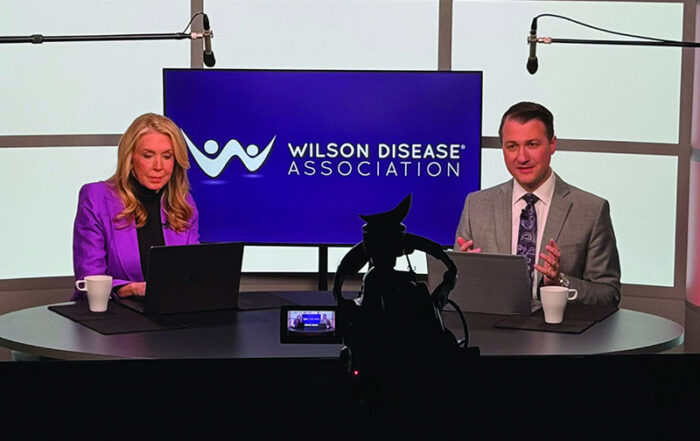
EL-PFDD Meeting for Wilson Disease: Patients and Caregivers Make Their Voices Heard
 By Edward Tabor, MD, and Sarah Wicks, JD, MPH
The WDA organized and led a daylong “Externally-Led Patient-Focused Drug Development” (EL-PFDD) meeting on January 29, 2026, designed to inform the FDA and other key stakeholders, including drug developers and healthcare providers, about the challenges facing patients living with Wilson disease (WD), their caregivers, and their families.
Diagnosis and Disease Progression
WD patients and their caregivers talked about what it really means to live with the disease and its impact on daily life. For many patients, a diagnosis of WD came many years after troublesome symptoms began, a delay due to a lack of awareness of WD among physicians. For many, WD began with liver symptoms (such as jaundice, ascites, or acute liver failure), abnormal liver tests, or neurological symptoms (such as tremors, dystonia, balance problems, drooling, slurred speech, loss of fine motor control, or trouble swallowing).
As the disease progressed, some could no longer walk more than short distances or climb stairs. Some developed psychiatric symptoms (such as anxiety, depression, mood swings, behavioral outbursts, hallucinations, impaired memory, and difficulty with decision-making). These symptoms affected daily life, relationships, employment, treatment adherence, and overall quality of life.
Fatigue was repeatedly described, with exhaustion resulting in job loss, leaving school, and impaired relationships. Others spoke about the difficulty performing activities of daily living, such as dressing, bathing, preparing meals, or traveling alone. Some parents and caregivers described how full-time caregiving responsibilities had reshaped family roles, finances, and long-term plans.
Fear of the future was discussed as an ongoing aspect of living with WD. Patients and families worry about disease progression, declining cognitive and physical function, loss of independence, and the unknown. Young adults expressed concern about completing higher education, maintaining employment, and forming relationships. Parents worried about what would happen as their children aged or as they themselves grew older.
The Treatment Burden
Existing treatments have allowed many patients to stabilize their WD. A few with severe WD were able to regain speech, mobility, cognition, or emotional stability as a result of treatment, but not all were so fortunate. For some, treatment side effects necessitated switching to alternatives, and in some cases, the side effects were severe and life-threatening. Others recounted how their condition declined rapidly despite aggressive treatment.
Even when treatments are effective, the burden of administration remains high. Many patients and families described treatment as a constant balancing act involving medication timing, dietary restrictions, monitoring, and ongoing adjustments. For many, WD feels like a second full-time job, with daily life revolving around timers for medication doses and complicated meal planning. In addition to copper-reduction therapies, many must juggle multiple medications for gastrointestinal, neurological, and psychiatric symptoms, as well as the difficulty of trying to maintain a low-copper diet. Patients and families emphasized the difficulty of taking medications multiple times per day on the required empty stomach, waking in the night to take doses, managing refrigeration requirements, and frequent lab testing to monitor treatment. This is particularly true for children, adolescents, and young adults seeking independence.
Looking Ahead
Patients and families emphasized their hopes for new treatments that would simplify their lives and expand their options. They hope for once-daily, weekly, or long-acting therapies — treatments that could be taken with food, require less monitoring, need no refrigeration, and have fewer side effects. Therapies specifically designed for children are especially needed, rather than adjusted versions of medications designed for adults; this will be an even greater need when prenatal screening becomes widely available.
The virtual meeting was attended by more than 350 people, including 40 FDA staff. A written summary of the meeting, called the Voice of the Patient Report, will be formally submitted to FDA and made publicly available on the FDA and WDA websites. A recording of the webcast is now available on the WDA website. These records of the EL-PFDD meeting will serve as an essential resource for FDA staff who are reviewing applications for new treatments and tests for WD, as well as for product developers working on clinical trials for WD.