
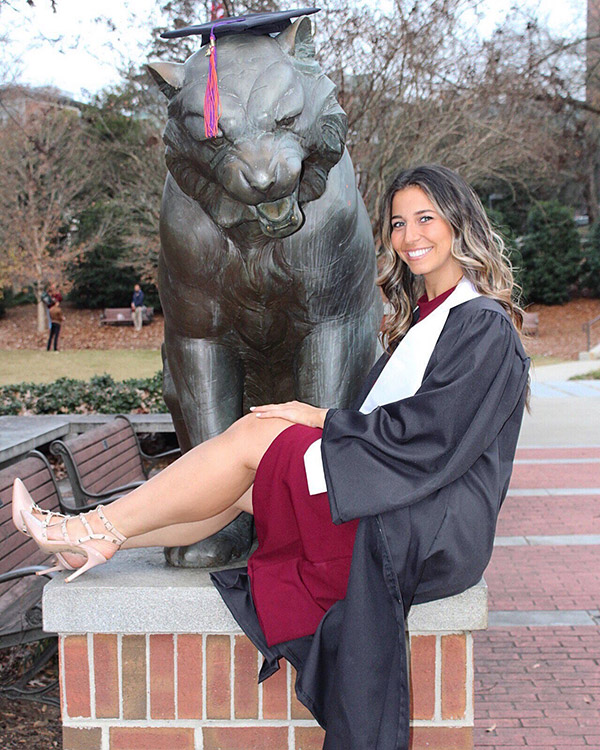
Delayne Di Gangi
My name is Delayne Di Gangi and I am a Wilson’s Disease patient. I just recently graduated from Clemson University with a degree in Bioengineering. My passion for bioengineering stems from my Wilson’s diagnosis and everything I have endured due to this disease. I want to be able to help other people with medical issues by dedicating my life to biomedical research.
Here is my story:
On March 30, 2015, I was a seemingly normal, healthy, 18-year-old enjoying the last semester of high school. I was a varsity soccer player and deciding between spending my college years at Cal Poly in California or at Clemson University in South Carolina the following fall. My parents took me to the doctor because my skin and eyes were yellowing dramatically. A blood test revealed that my liver enzyme, as well as most of my other blood work, was extremely elevated. I was immediately rushed to Northwestern Memorial Hospital by ambulance and admitted straight onto the transplant floor. Countless doctors began to stream in from hepatology, neurology, gastroenterology, ophthalmology and many other departments.
It was in the early hours of April 1st that we initially heard about Wilson’s Disease. The doctors explained the condition and its rarity. They said if left undiagnosed and untreated Wilson’s will result in a liver transplant. The doctors were fairly certain that I was suffering from end stage Wilson’s Disease and registered me on the national transplant list. My team of doctors assured us that once they confirmed that my ailment was Wilson’s, I would rise to the top of the list as a status one patient.
Many tests were done in search for this diagnosis. One test was done to analyze my urine, which was now as dark as coffee. The result was the first confirmation that I in fact did have Wilson’s Disease. On April 3, 2015 I was listed as status one. During my time in the ICU waiting for a lifesaving liver transplant, I underwent many procedures to prolong my life and keep me stable. One of which is called plasmapheresis. This was done by attaching two needles to the catheter tube that was inserted in my heart. Simply, my blood was being taken out of my body through one of the catheter tubes. It was then run through the apheresis machine. Once in the machine, my blood cells were separated from the plasma and the copper was stripped out by spinning the blood at high speeds. After, my blood cells were mixed with replacement plasma and the new mixed blood was then returned into my body through the other catheter tube. This procedure took two hours each time. My parents and I would sit and watch the large bag fill with another dark brown fluid that is supposed to be white. Beyond the plasmapheresis, I was also given medicine in hopes of eliminating the ammonia from my system before it started to negatively affect my brain. All of these were temporary treatments to extend my life.
Nearly one week after my original acute liver failure and diagnosis, on April 5, 2015 I received a lifesaving liver from a deceased donor. Today, in hindsight, I think about other symptoms I had throughout my childhood that could and should have pointed to Wilson’s Disease. I was tired and moody. I constantly wanted to chew on ice. The size of my legs was getting bigger each year even though I was an avid athlete. In fact, we even went so far to blame the enlargement on my years of soccer. We thought it must be muscle development from all the time I spent playing, but my legs had been filling with more fluid every year due to my failing liver. The larger missed symptom was when I was 16, two years prior to my liver failure. I had been suffering from extreme fatigue and could not chew enough ice. As a result, I had blood work done to rule out anemia. The bloodwork did not show signs of anemia but did show high liver enzymes! Tragically, this sign was misdiagnosed, and I was sent to an oncologist instead of a gastroenterologist. I was instead diagnosed with mononucleosis and my Wilson’s Disease continued to go undetected. My hope and purpose in sharing my story is to spread awareness about Wilson’s Disease. Through education, and stories like mine, there is a chance that someone who is suffering from Wilson’s will be diagnosed early enough to treat the condition efficiently and effectively before it can do great harm to anyone else.
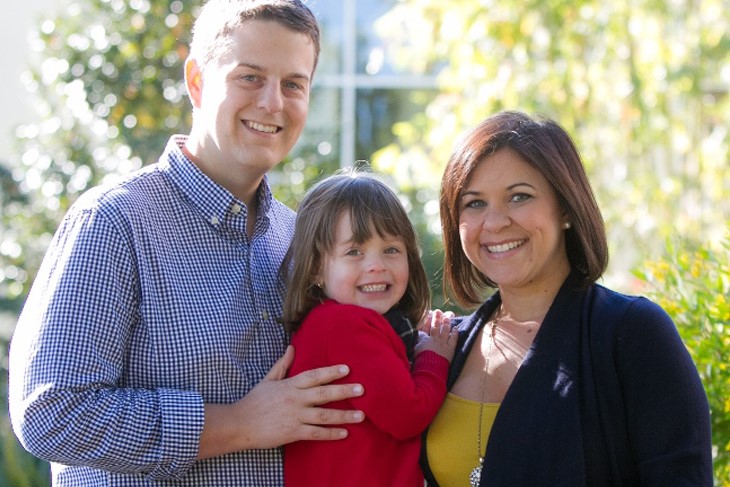
Karl Dyczek
Out of no where, in February 2014, I had jaundice, a lack of appetite, and swelling in my abdomen, feet, and ankles. As a result, I was admitted to the hospital right away. I had to get a blood transfusion the night I was admitted. I spent three days at the hospital and was diagnosed there with cirrhosis of the liver. I was referred to a gastroenterologist and hematologist. After getting a liver biopsy, completing the hemochromatosis (I’m a carrier) and Wilson’s Disease genetic mutation blood tests, and 24 hour urine test I was diagnosed in April 2014 with WD.
Although I have cirrhosis, I was not in need of a liver transplant like other WD patients. My liver function lab work is now in normal range. A brain MRI reflected no copper deposits in my brain.
As of last year, I have a little amount of copper in one of my eyes. I am blessed and grateful to be doing much better nowadays.
Donations
Why Your Donation Matters
Your donation to the Wilson Disease Association does more than keep the lights on—it powers education, awareness and action. With your support, we’re able to maintain vital resources like this website, produce trusted educational materials, fund critical research and host events that bring together patients, caregivers and medical professionals. Most importantly, your generosity helps raise awareness so more people are diagnosed earlier and treated effectively—giving them the best chance at a full, healthy life.
When you give, you’re not just supporting an organization—you’re joining a powerful movement to change the future of Wilson disease. You’ll stay informed about the latest in research and treatment, gain access to exclusive webinars and educational resources, and remain connected to a global community that understands. For more than 40 years, our shared commitment has fueled advances in care, deepened understanding, and amplified the voices of those affected by Wilson disease. Together, we’re building a stronger, more informed future.

WILSON DISEASE ASSOCIATION
Contact Us
- Toll Free: 866-961-0533
- Phone: 414-961-0533
Email: info@wilsonsdisease.org